
Gaming moves fast—and if you’re not keeping up with the latest shifts in mechanics, multiplayer trends, and genre innovation, you’re already behind. Whether you’re here for breaking headlines, deeper insight into evolving playstyles, or practical setup optimization hacks, this article is built to give you exactly what you’re searching for: clear, focused analysis that cuts through the noise.
We break down what’s changing across competitive and cooperative multiplayer dynamics, examine how core systems are being redesigned for modern players, and explore the impact of RPG genre transformation on progression, storytelling, and player agency. Every insight is grounded in hands-on gameplay analysis, ongoing trend monitoring, and a close read of how top titles are reshaping the landscape.
If you want more than surface-level updates—if you want to understand why these shifts matter and how they affect the way you play—you’re in the right place.
From Dice Rolls to Digital Realms: Charting the RPG Quest
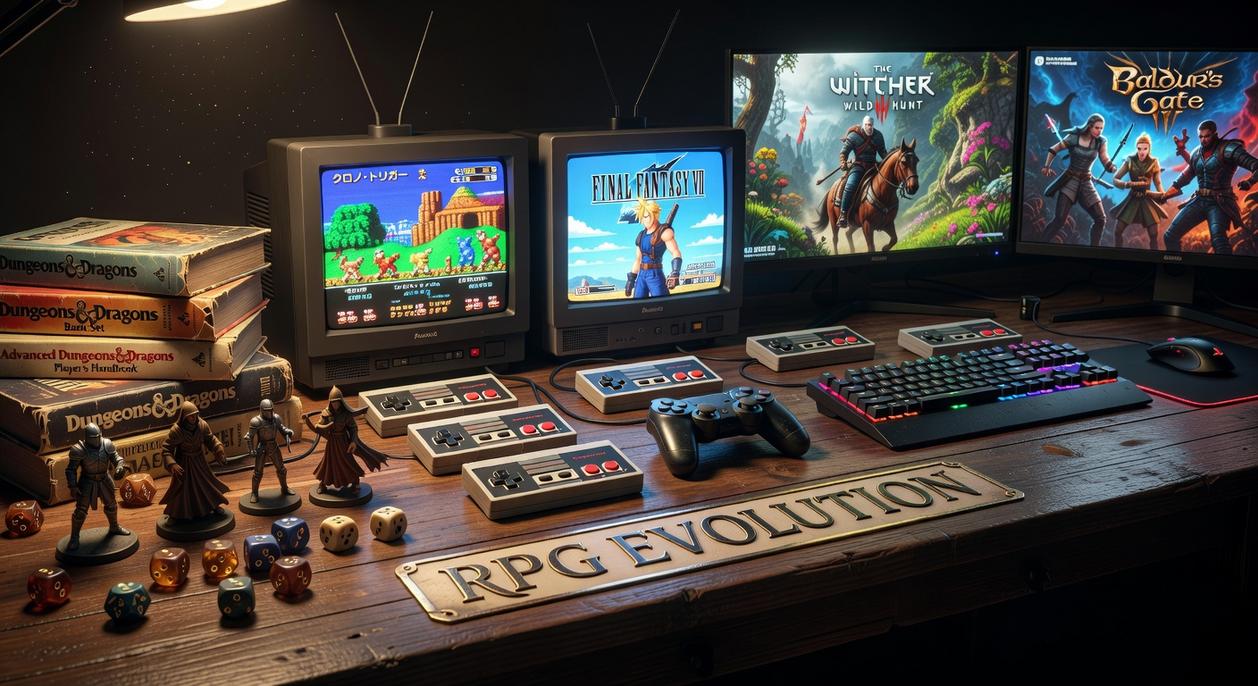
RPGs began as tabletop experiments, where players used rulebooks, dice, and imagination to co-create adventures. Early systems like Dungeons & Dragons defined core mechanics: stats, levels, and turn-based combat. As computers advanced, these rules migrated into pixels, shaping classics such as Final Fantasy and Baldur’s Gate.
Confused about what counts today? Focus on three pillars:
- Character progression through measurable growth
- Player choice affecting narrative or builds
- Systems-driven worlds reacting to decisions
The RPG genre transformation blurred boundaries, blending action, strategy, and open-world design. Modern RPGs prioritize agency, in indie throwbacks.
Tabletop role-playing games like Dungeons & Dragons built the mechanical backbone that still powers modern RPGs. Early rulebooks formalized character stats—Strength, Dexterity, Constitution—numerical attributes that defined what a hero could actually do. Classes such as Fighter or Wizard created structured playstyles, while leveling up introduced measurable progression (a psychological hook designers still rely on). Inventory management forced meaningful trade-offs: carry one more potion or that heavier sword? These systems weren’t just features; they gave players agency and clear feedback loops.
At the center sat the Dungeon Master, effectively the first “game engine.” This human referee interpreted rules, simulated worlds, and adjusted difficulty in real time. Early computer RPGs attempted to replicate that adaptive storytelling through code-driven logic trees and probability tables.
From this era emerged the core loop:
- Exploration
- Combat resolution
- Reward and progression
That loop enabled the RPG genre transformation from imagination-fueled sessions to digital worlds—structured, scalable, and endlessly replayable.
The Digital Frontier: Rise of the CRPG
I still remember the first time I booted up Ultima IV on a clunky old PC—the whir of the disk drive felt like a portal opening (or maybe just a machine protesting). That moment captures the heart of early Computer RPGs, or CRPGs—role-playing games designed for computers that attempted to translate tabletop rule systems into digital form. This was the beginning of a true RPG genre transformation.
Translating the Ruleset
Early titles like Ultima and Wizardry focused on faithfully recreating dice rolls, character stats, and party management. A “ruleset”—the mathematical framework governing combat and progression—was king. If your Dexterity was low, you missed. A lot. (Painfully often.) These systems mirrored tabletop classics like Dungeons & Dragons (Gygax & Arneson, 1974).
Mechanics Over Narrative
Story often took a backseat to mechanics—interlocking gameplay systems that determined outcomes. Combat was turn-based, meaning each character acted in sequence rather than real time. It was chess with fireballs. Deep statistical layers rewarded patience, not button-mashing.
Player-Driven Exploration
Movement happened on grid-based maps—tile by tile, like navigating graph paper. Exploration meant risk. Every step could trigger a fight. Discovery felt earned, not scripted. (Think less cinematic cutscene, more wandering into danger like Frodo without a map.)
A Tale of Two Philosophies: JRPGs vs. Western RPGs
The JRPG Approach
Japanese RPGs (JRPGs) emphasize tightly written, character-driven stories with pre-defined protagonists—meaning you step into the shoes of a crafted hero rather than building one from scratch. Franchises like Final Fantasy and Dragon Quest define this style. Their design often features linear progression and stylized, turn-based systems such as the Active Time Battle (ATB) system, which blends real-time pressure with menu commands. According to Square Enix sales data, the Final Fantasy series has surpassed 180 million copies sold worldwide, underscoring the enduring appeal of cinematic storytelling and structured combat.
The WRPG Approach
Western RPGs (WRPGs) prioritize player agency—the freedom to shape your character and influence the world. Series like The Elder Scrolls V: Skyrim (over 60 million copies sold, Bethesda) and Fallout showcase open worlds, branching quests, and systemic design, where mechanics interact dynamically.
- Custom character creation
- Open-ended exploration
- Consequence-driven choices
Diverging Playstyles
JRPGs deliver a curated epic (think playable anime saga), while WRPGs let you author your own legend. Some argue linearity limits freedom. Yet structured narratives often achieve stronger emotional payoffs—just look at Final Fantasy X. Meanwhile, WRPG flexibility fuels replayability and experimentation, central to ongoing RPG genre transformation. For more on evolving design trends, see why indie platformers are making a strong comeback.
The Action Revolution: Real-Time Combat and Hybrid Genres
When Diablo shattered the turn-based mold, it didn’t just speed things up—it sparked a full RPG genre transformation. By merging character progression with real-time, isometric combat, it created the Action RPG (ARPG): fast clicks, faster decisions, constant dopamine (because yes, numbers flying off enemies feel good).
The real hook? The loot loop:
- Kill enemies
- Get better gear
- Unlock stronger builds
- Tackle bigger threats
If you’re jumping into an ARPG today, focus on build synergy first. Pick one damage type, stack bonuses around it, and ignore “cool but random” drops early. Specialization beats clutter.
Then came Dark Souls, proving action doesn’t mean mindless chaos. Its methodical combat, stamina management, and environmental storytelling raised the stakes. Practical tip: treat every encounter like a duel—observe patterns, dodge first, attack second.
Want to see how these mechanics evolved further? Check modern breakdowns like this ARPG analysis.
Action and depth aren’t opposites—they’re partners.
Have you ever wondered how MMOs turned solitary quests into bustling digital cities? Early titles like EverQuest and World of Warcraft pushed the RPG genre transformation by moving character progression into persistent online worlds where thousands logged in together. Instead of saving the world alone, you joined raids—large coordinated battles against powerful bosses—formed guilds, and traded in player-driven economies shaped by supply and demand. Sound familiar? That loop became the blueprint for “games as a service,” constantly updated and community fueled. Why do players stay for years? Because friendships, rivalries, and shared stories outlast any loot drop in virtual worlds.
We’ve traced the RPG’s path from basement tables to billion-dollar blockbusters, and now the big question is: what’s next? At its core, an RPG hinges on player progression—the steady improvement of skills, gear, or story influence—and role inhabitation, meaning you make choices as someone inside the world. Because those mechanics plug into shooters, sports sims, and even cozy farming titles, definitions blur. Some argue that dilution weakens identity. However, RPG genre transformation proves adaptability is its strength. Looking ahead, expect AI-driven NPCs with dynamic dialogue and cross-genre systems. Pro tip: prioritize games with scalable builds for long-term replay value today.
Level Up Your Next Adventure
You came here to understand how modern gaming trends, evolving mechanics, and multiplayer dynamics are reshaping the way you play. Now you’ve seen how smart setup tweaks, deeper system knowledge, and awareness of RPG genre transformation can completely change your in-game results.
If you’ve ever felt stuck with outdated strategies, underperforming builds, or a setup that holds you back, you’re not alone. The gaming landscape moves fast—and falling behind means missing out on smoother performance, stronger team synergy, and more rewarding progression.
Now it’s time to act. Apply the optimization hacks, refine your playstyle, and stay ahead of genre shifts so you can dominate your next session instead of reacting to it.
Ready to stop guessing and start winning? Get the latest breakdowns, performance tweaks, and gameplay insights trusted by thousands of competitive and casual players alike. Don’t let outdated strategies cost you another match—level up your knowledge and jump back in stronger than ever.