
Gaming moves fast. One week it’s a meta shift that flips competitive ladders upside down, the next it’s a surprise patch that changes how your favorite build performs. If you’re here, you’re looking for more than surface-level headlines—you want to understand what’s changing, why it matters, and how it affects the way you play.
This article breaks down the latest gaming developments through the lens of real mechanics, evolving genres, multiplayer dynamics, and performance optimization. Whether you identify as a Aggressive Rushdown, Stealth Tactician, Support Anchor, or High-Risk Glass Cannon, you’ll see how emerging updates and design trends directly impact your preferred approach.
We analyze patch notes, competitive trends, and community data to separate hype from meaningful change. Instead of recycled news, you’ll get focused insights on playstyles, strategy shifts, and setup tweaks that actually improve your experience.
By the end, you’ll know not just what’s happening in gaming right now—but how to adapt and stay ahead.
Decoding Your Gamer DNA: A Guide to Playstyles
Gaming jargon can feel like another language. A rusher prioritizes speed and aggression, while a camper locks down one area for control. A min-maxer (someone who optimizes stats for maximum efficiency) squeezes every advantage from a build.
To identify your style:
- Track how you react under pressure. Do you push or reposition?
- Review match stats for patterns in kills, assists, or resource use.
- Ask teammates how they’d describe you (brace yourself).
Understanding gaming playstyle archetypes sharpens teamwork. For example, pairing a cautious defender with an aggressive entry player balances risk and reward—like assembling the perfect RPG party.
The Spectrum of Aggression: Offensive vs. Defensive Play
Competitive games aren’t just about reflexes. They’re about how you apply pressure, deny space, and force decisions. Most breakdowns stop at “aggressive vs. defensive.” That’s surface-level. The real edge comes from understanding how each archetype manipulates tempo—the speed at which meaningful actions occur in a match.
Core Archetypes in Action
The Aggro Player (The Berserker): Focuses on relentless, forward pressure. Seeks to overwhelm opponents before they can execute a strategy. Thrives in fast-paced combat scenarios. Examples: Shotgun rushers in FPS games, hyper-aggressive fighting game characters.
The Defensive Player (The Turtle/Camper): Prioritizes map control, resource protection, and counter-attacks. Wins by outlasting opponents and capitalizing on their mistakes. Examples: A sniper holding a key sightline, a strategy player building heavy fortifications.
The Zoner (The Puppeteer): A tactical middle ground. Uses projectiles, traps, or area-of-effect abilities to control space and keep opponents at an optimal distance. Common in fighting games and MOBAs.
Here’s what often gets missed: each style has a UNIQUE INFORMATION ADVANTAGE. Aggro forces reactions (think Doom speedrunners dictating chaos). Defensive players gather data by baiting mistakes. Zoners restrict options before a fight even starts—like setting the board in chess.
• Pro tip: Track not just kills or damage, but SPACE DENIED per minute.
Critics argue defensive play is “cheap” or zoning is “annoying.” Maybe. But winning isn’t about popularity—it’s about control. Master tempo, and you control the match.
Strategic Approaches: How You Think, Not Just How You Fight
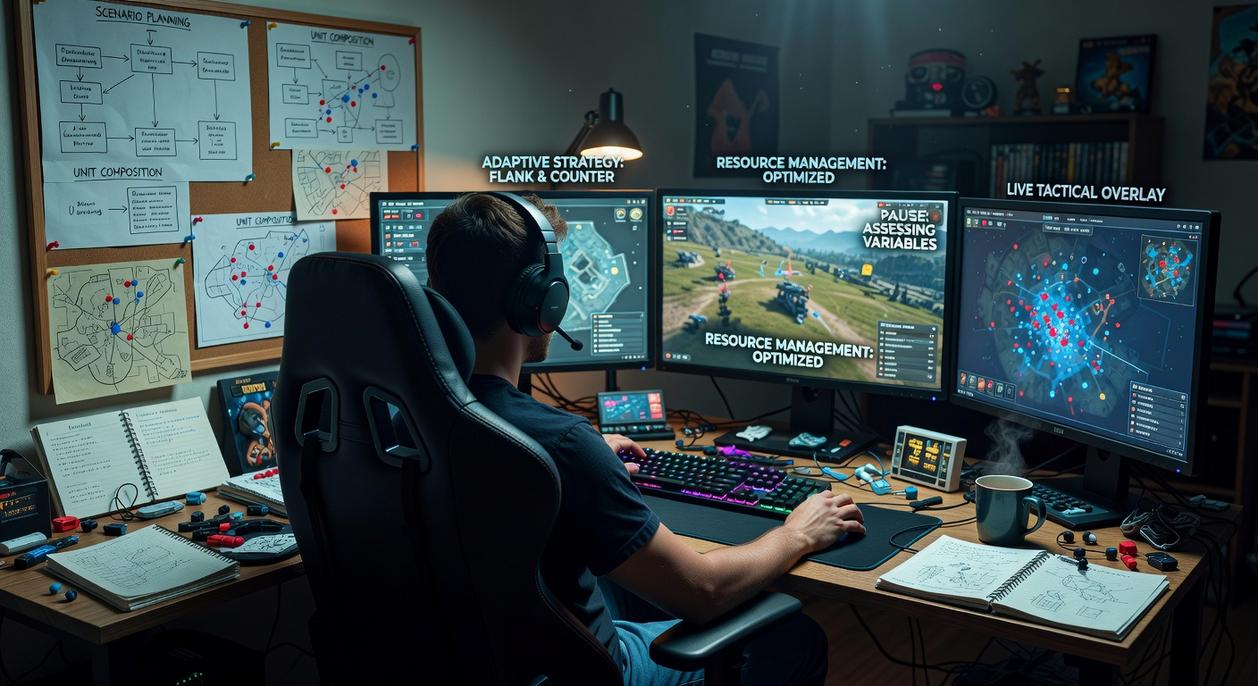
Skill matters, of course—but mindset often matters more. In modern gaming, strategic identity shapes everything from your loadout choices to how your team perceives you. In other words, it’s not just about reflexes; it’s about reasoning.
Core Strategic Archetypes
The Tactician (The Chess Master): Meticulously plans every move. Focuses on long-term strategy, positioning, and exploiting game mechanics. Often seen in turn-based strategy games and competitive shooters, where they act as in-game leaders.
The Min-Maxer (The Optimizer): Obsessed with statistical perfection. Spends hours theorycrafting the most efficient character builds, gear loadouts, or economic strategies to gain a mathematical edge. Prevalent in RPGs and MMOs.
The Explorer (The Cartographer): Motivated by discovery over combat or objectives. Seeks to uncover every secret, find every collectible, and see every corner of the game world. Thrives in open-world games with rich lore and hidden areas.
Each approach delivers distinct advantages. For instance, Tacticians excel in ranked environments because structured planning reduces randomness (think of them as the Professor X of the squad). Meanwhile, Min-Maxers squeeze maximum value from limited resources—especially critical in games with complex damage formulas or in-game economies. Explorers, on the other hand, often unlock hidden perks, secret quests, or rare gear that others miss entirely.
Some argue that rigid archetypes limit creativity. That’s fair. However, understanding your default mindset helps refine it. A Min-Maxer who studies map flow gains flexibility; an Explorer who tracks spawn timers gains efficiency.
Ultimately, strategic awareness turns mechanics into mastery—and that’s where consistent wins begin.
Multiplayer Dynamics: The Holy Trinity of Team Roles
Every multiplayer game eventually reveals the same truth: balance wins battles. And in my experience, nothing captures that better than the classic trio of gaming playstyle archetypes.
First, The Tank (The Vanguard). This is the frontline protector, designed around survivability (the ability to withstand heavy damage) and crowd control (abilities that stun, taunt, or displace enemies). In MMOs like World of Warcraft or hero shooters like Overwatch, the Tank dictates positioning. Some argue Tanks are boring because they don’t top damage charts. I disagree. A great Tank controls tempo, forces cooldowns, and creates space (which, frankly, wins fights before they even start).
Next comes The DPS/Carry (The Glass Cannon). High damage, low durability. Their job is simple: eliminate threats fast. However, “simple” doesn’t mean easy. Positioning, timing, and mechanical skill separate average players from clutch legends. Think of that perfectly timed ultimate that flips a losing match. That’s impact.
Finally, The Support (The Healer/Enabler). Often underestimated, yet absolutely pivotal. Through healing, buffs (temporary stat boosts), and debuffs (enemy stat reductions), Supports amplify everyone else’s strengths. Some players claim Supports lack agency. But understanding how risk and reward systems shape player decisions proves otherwise: https://mopfell78.com/how-risk-and-reward-systems-shape-player-decisions/.
Ultimately, teams that respect all three roles don’t just survive matches—they control them.
Sticking to a single lane is overrated. In my experience, the players who climb fastest are the ones who treat identity as flexible. Sure, specialists argue mastery demands commitment. And they are not wrong; deep focus builds mechanical skill. However, matches are messy. Momentum swings, teammates misplay, opponents adapt. That is why gaming playstyle archetypes should be tools, not cages. An Aggro player who can pivot defensive mid-round becomes unpredictable. Likewise, a support who pressures flanks reshapes tempo. So experiment, reflect, adjust. In my view, adaptability wins championships. Predictability is comfort, but versatility is power. Choose growth over labels.
You now have a framework for reading the battlefield beyond button-mashing. From aggressive rushers to tactical supports, each archetype signals predictable choices under pressure. That clarity matters. Some players argue instinct beats analysis, that overthinking ruins flow. Fair—but awareness sharpens instinct. When you can label a flanker early, you rotate sooner and win trades more often (yes, even against that Genji main who thinks he’s invisible).
Next session, pause between rounds. Identify your default tendencies, then counter-pick deliberately. Track outcomes for five matches. Pro tip: review one replay immediately after. For breakdowns, explore advanced playstyle guides. Mastery follows intention.
Level Up Your Game Today
You came here to make sense of the latest gaming headlines, evolving genres, and the mechanics that actually shape how you play. Now you have a clearer view of how multiplayer dynamics shift metas, how smart setup tweaks sharpen performance, and how different approaches—from Aggressive Rushdown to Stealth Control, Support Anchor, and Tactical Strategist—define winning outcomes.
The real frustration isn’t a lack of games. It’s falling behind the meta, misreading playstyles, or losing because your setup and strategy aren’t optimized. Staying competitive means understanding not just what’s trending, but why it works.
If you’re serious about sharper mechanics, smarter builds, and dominating your next session, don’t stop here. Dive deeper into our latest breakdowns and optimization guides.
Join thousands of competitive players who rely on us as a top-rated source for actionable gaming insights. Level up your playstyle, refine your setup, and start winning more—right now.