That split-second hesitation—the missed headshot, the failed dodge—is often the only thing standing between you and the win screen. In today’s hyper-competitive lobbies, elite reflexes aren’t optional; they’re the baseline. If you’re here, you want to improve gaming reaction time in a way that actually translates to more clutch plays and fewer frustrating losses. This guide breaks down the science behind reaction speed and turns it into a practical blueprint—covering targeted in-game drills, hardware optimizations, and mental conditioning techniques designed to measurably sharpen your responses and give you a real competitive edge.
The Cognitive Chain Behind Every Click
I remember losing a clutch round because I swore I shot first. Watching the replay, though, told a different story. That split second exposed what I now call the cognitive chain—the four-stage process behind every reaction:
- Stimulus detection – spotting the enemy peek.
- Signal processing – recognizing it’s a threat (not a teammate).
- Decision making – choosing to fire.
- Action execution – actually clicking.
At first, I blamed my mouse. However, the real lag was in stages two and three.
This is where simple reaction time differs from choice reaction time. Simple reaction is one response to one signal (like a drag race light). Gaming, on the other hand, demands choice reaction—multiple possibilities, multiple outcomes. Naturally, that’s slower and far more trainable.
For a while, I thought just grinding matches would improve gaming reaction time. Yet eventually, I plateaued. The breakthrough came from deliberate drills—aim trainers, scenario reps, and reviewing mistakes instead of rage-queuing (we’ve all done it).
The Digital Dojo: In-Game Drills to Forge Faster Reflexes
To elevate your gaming performance, adopting pro gamer habits not only sharpens your reaction time but also enhances your understanding of core game mechanics, which you can explore further in our beginner-friendly guide – for more details, check out our Understanding Core Game Mechanics: A Beginner-Friendly Guide.
Raw talent is overrated. Reflexes aren’t just “natural”—they’re trained responses built through structured repetition. A digital dojo is simply a focused practice environment where you isolate one mechanic at a time (think less chaotic match, more lab work).
Some players argue that aim trainers are pointless because “real games are different.” Fair. Context matters. But controlled drills build the neural speed required to perform under pressure (much like batting cages before the World Series).
Utilizing Aim Trainers
Tools like Aim Lab and KovaaK’s let you target specific weaknesses:
- Flicking (Gridshot): Snap between targets quickly to sharpen acquisition speed. Benefit: faster first-shot accuracy in clutch duels.
- Tracking (SphereTrack): Maintain crosshair contact on moving targets. Benefit: improved beam consistency in sustained fights.
For a deeper breakdown, explore advanced aim training techniques backed by science to connect drills with reaction-time research.
Genre-Specific Training Regimens
FPS Drills
- Practice peek-and-clear routines in custom maps.
- Run bot sessions focused solely on one-tap headshots.
This trains precision and speed simultaneously (yes, you can build both at once).
MOBA/RTS Drills
- Perfect last-hitting under simulated pressure.
- Rehearse dodging high-velocity skill shots in custom lobbies.
You’re conditioning anticipation, not just clicks.
Fighting Game Drills
- Isolate specific mix-ups in training mode.
- Study frame data (the numerical breakdown of move timing) to understand exact reaction windows.
Some say grinding ranked is enough. But targeted drills reduce randomness and directly improve gaming reaction time.
Pro tip: Track accuracy percentages weekly—data beats vibes every time.
Slaying Input Lag: Optimize Your Setup for Zero-Delay Performance
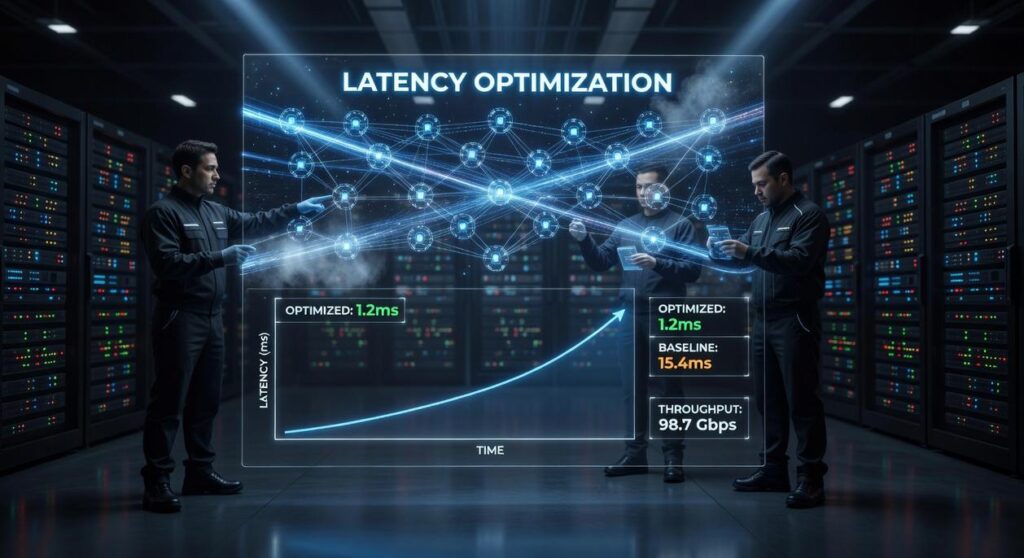
Input lag is the delay between your action (clicking or pressing a key) and seeing it happen on screen. In competitive games, that split second decides who wins the duel.
Hardware: 60Hz vs 144Hz+
A 60Hz monitor refreshes the image 60 times per second. A 144Hz+ panel does it more than twice as often. The result? Smoother motion and less hardware-to-eye delay. Pair that with a wired mouse and keyboard instead of Bluetooth, and you remove transmission latency (yes, even “low-latency” wireless adds a few milliseconds).
In short: 60Hz + wireless = playable. 144Hz+ + wired = responsive. If you want to improve gaming reaction time, start here.
Software Tweaks: Pretty vs Fast
Next, choose performance over eye candy. Disable V-Sync (it synchronizes frames but adds delay), lower shadow quality, and push for maximum FPS—not maximum visuals. Update GPU drivers regularly, and enable your OS Game Mode to prioritize system resources.
The Unseen Enemy: Background Bloat
Finally, compare a clean system vs one running ten background apps. Extra processes eat CPU cycles, causing inconsistent frame times (micro-stutters you feel even if you don’t see them). Close launchers, overlays, and auto-updaters before playing.
Pro tip: If your FPS fluctuates wildly, check Task Manager first. Sometimes the real boss fight is your browser.
Fueling the Machine
Have you ever wondered why your aim feels crisp one night and sluggish the next? It might not be your settings—it might be your body. Hydration affects how efficiently nerves transmit electrical signals; even mild dehydration can impair attention and reaction speed (Journal of Nutrition, 2012). Sleep, meanwhile, is when memory consolidation occurs—the brain strengthens the neural pathways you built in practice (Walker & Stickgold, 2006). Miss it, and your flick shots pay the price.
Your body is part of your build. Ignore it, and you throttle performance.
Some players argue mechanics alone matter. “Grind harder,” they say. But if cognitive processing slows, how can you improve gaming reaction time consistently?
Taming the Tilt
Sound familiar? One bad round spirals into five. That’s tilt—an emotional response that clouds judgment. Try this:
- Inhale for four seconds.
- Hold for four.
- Exhale for six.
This activates the parasympathetic nervous system, lowering stress and sharpening focus (Harvard Health, 2020). Pro tip: practice between matches, not just during meltdowns.
Eye Agility Training
Your eyes have muscles—train them. Track a moving pen for 60 seconds. Shift focus from your thumb to a distant wall repeatedly. These drills improve target tracking and reduce fatigue during marathon sessions. After all, if your eyes lag, can your crosshair really lead?
Integrating Speed into Your Playstyle
Speed isn’t a talent you’re born with—it’s a system you build. You now understand the loop: study the mechanics behind faster reactions, train with deliberate drills in your digital dojo, optimize your gear for minimal input delay, and condition your mind and body to stay sharp under pressure. That’s how you improve gaming reaction time in a way that actually sticks.
If you’ve felt held back by slow reflexes, remember this: it’s a solvable problem, not a permanent handicap.
Here’s your move—add one reaction drill to your warm-up for the next seven days. Stay consistent. Consistency is what turns practice into instinct.