

Role-playing games have evolved from tabletop maps and handwritten character sheets into sprawling digital worlds shaped by player choice, modding communities, and live-service updates. If you’re searching for a clear breakdown of role playing game history, core mechanics, and how modern playstyles have transformed the genre, this article delivers exactly that. We explore how classic systems influenced today’s open-world design, why multiplayer dynamics reshaped progression models, and how emerging trends continue to redefine immersion.
Whether you’re a longtime RPG fan or just stepping into your first campaign, understanding the genre’s evolution helps you play smarter and appreciate the systems beneath the surface. Drawing on deep analysis of gameplay frameworks, combat loops, narrative branching, and optimization strategies, this guide connects past innovations to current mechanics. You’ll walk away with sharper insight into how RPGs work, why they feel so engaging, and how to optimize your setup for the best possible experience.
Ever wanted to be the hero of your own story? That urge sparked a revolution. This article traces role playing game history from humble wargame tables to today’s vast digital realms. At first, dice and paper offered imagination; now, servers and GPUs render living worlds. Tabletop vs. video game: one relies on human storytelling, the other on coded systems—both chasing immersion. Critics argue digital RPGs diluted creativity. However, technology expanded access, scale, and persistence. Along the way, you’ll see milestones, design philosophies, and breakthroughs that turned a niche pastime into entertainment’s powerhouse. Think Dungeons & Dragons to Skyrim. Today. Compared.
The Breakthrough (1974): From Miniatures to Myth
Before fireballs flew across graph paper, there was Chainmail, a medieval miniature wargame where players commanded units like battlefield generals. Yet some players wanted more. “What if,” Gary Gygax reportedly mused, “each figure was a single hero?” That simple question shifted everything. Instead of armies, you had individuals. Instead of one battle, you had persistence.
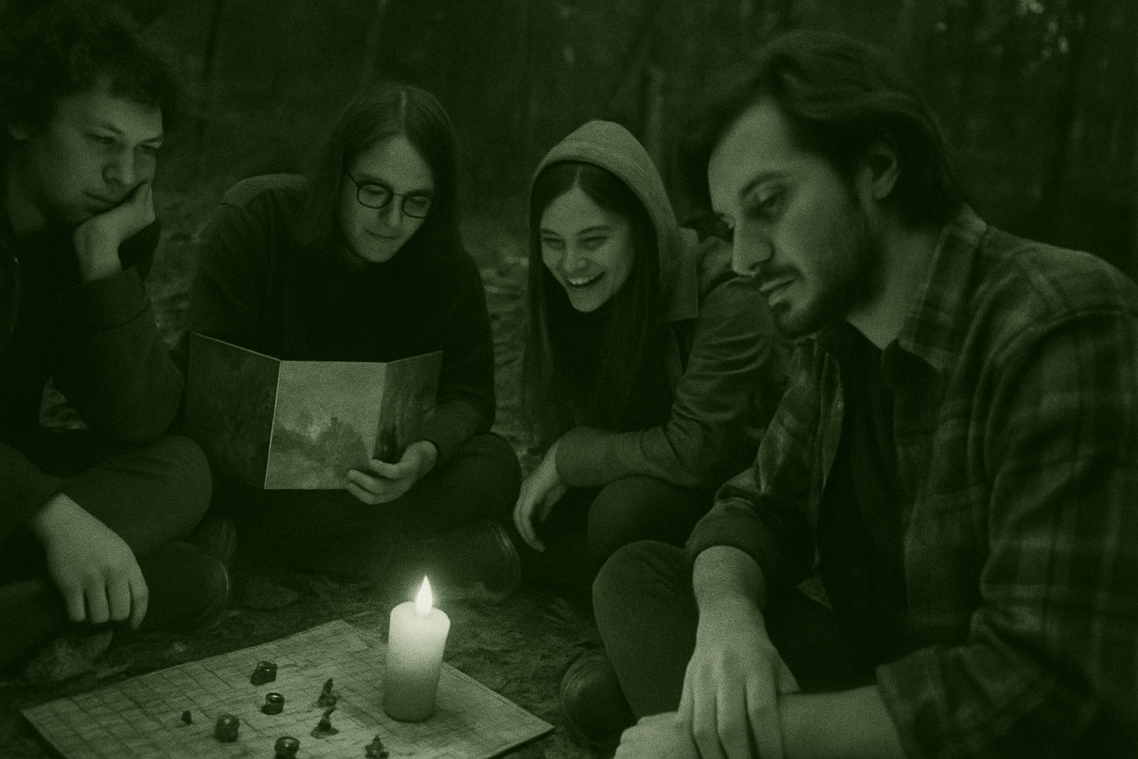
Then came Dungeons & Dragons in 1974. Dave Arneson described it plainly: “You go down into a dungeon with your friends and see what happens.” What happened was revolutionary. Characters had stats (numerical abilities like Strength or Intelligence), they leveled up (grew stronger through earned experience), and a Dungeon Master guided the world while players shaped the story. In other words, collaborative storytelling became the engine.
The core gameplay loop soon crystallized: explore dangerous spaces, fight monsters, gain treasure and experience, repeat. Simple? Yes. Endlessly flexible? Also yes (and that’s the magic trick).
Critics argued it was too loose, too reliant on imagination. But that freedom built the vocabulary of role playing game history: “hit points,” “armor class,” “campaign.” As one early player put it, “We weren’t just playing—we were living another life.” And from that basement-table spark, an entire genre caught fire.
Pixels and Possibilities: The First Digital Adventures
As we explore the transformation of role-playing games over the decades, it’s fascinating to see how innovations, much like the gaming hacks shared in our article on Etesportech, have continually shaped and redefined player experiences – for more details, check out our Gaming Hacks Etesportech.
Before sprawling open worlds and cinematic cutscenes, there were university mainframes humming like oversized sci‑fi props. On the PLATO system in the 1970s, students built pedit5 and dnd, text-based experiments that transformed tabletop rules into glowing lines of code. These early titles drew directly from role playing game history, swapping dice and graph paper for keyboards and monochrome monitors (imagine Stranger Things, but with fewer Demogorgons and more command prompts).
Then came the commercial pioneers. Ultima and Wizardry didn’t just sell games; they defined the computer RPG (CRPG), meaning a role-playing game played on a computer rather than around a table. They popularized automated combat, persistent worlds, and party management systems that felt revolutionary. If tabletop D&D was a garage band, these games were the moment it went electric.
Translating the tabletop wasn’t simple. Developers had to automate dice rolls (random number generators), visualize maps with tile-based graphics, and digitize character sheets into trackable stats. It was a technical balancing act—part math, part magic.
Yet something changed. Early CRPGs were solitary quests, replacing pizza-fueled group storytelling with solo dungeon crawls. Some argue this lost the social spark. Others counter it expanded access, letting anyone adventure anytime—no scheduling required.
For more on gaming’s broader evolution, see from arcade to open world the evolution of action games.
A Tale of Two Continents: The JRPG and WRPG Divide
At first glance, Japanese RPGs (JRPGs) and Western RPGs (WRPGs) seem to share DNA—stats, swords, and sprawling adventures. However, their philosophies diverge in ways that can confuse newcomers.
The Western RPG (WRPG) Philosophy
WRPGs prioritize player agency, meaning your choices directly shape the world and story. Titles like Baldur’s Gate and Fallout emphasize open worlds (large, explorable environments with minimal restrictions), complex skill systems, and branching dialogue trees. A dialogue tree is a conversation system where players pick from multiple responses, often affecting quests or morality.
Some argue this freedom can dilute narrative focus. That’s fair—when everyone’s story is different, it can lack a single dramatic punch. Still, supporters counter that immersion comes from authorship. You’re not watching a hero. You are the hero (yes, even if your charisma stat is a tragic 3).
The Japanese RPG (JRPG) Philosophy
In contrast, JRPGs like Dragon Quest and Final Fantasy lean into curated storytelling. You typically control a pre-defined protagonist within a linear narrative. Combat often uses turn-based systems, including the ATB (Active Time Battle) system—a mechanic where actions occur based on timed gauges rather than strict turns.
Critics sometimes call JRPGs restrictive. Yet their structure allows tighter pacing, emotional arcs, and stylized worlds—think anime-inspired visuals and orchestrated boss battles worthy of a blockbuster finale.
Divergent Evolution
These differences trace back to role playing game history, cultural storytelling norms, and hardware. Early PCs in the West supported sprawling simulations, while Japanese consoles favored streamlined design. Over time, these constraints became identities—two continents, two philosophies, one beloved genre.
Online worlds didn’t appear overnight. Early MUDs (Multi-User Dungeons) were text-based spaces where players typed commands to explore shared fantasy realms, laying the groundwork for modern connectivity. From there, graphical MMORPGs like Ultima Online and EverQuest added persistent worlds—meaning the game continues even when you log off—and social systems that kept communities alive.
World of Warcraft refined the formula with streamlined quests, readable interfaces, and balanced classes. It turned niche hobby into GLOBAL phenomenon and answered a key question: could millions share one evolving world? Yes.
Meanwhile, Diablo pioneered the loot-driven action RPG, blending real-time combat with progression systems built around randomized gear drops (the addictive “just one more run” loop). That mix reshaped role playing game history.
Today, The Elder Scrolls series merges open-world freedom with visceral combat. If you’re choosing where to start, focus on community size, update cadence, and combat feel—they determine long-term enjoyment. Choose wisely now.
The Endless Quest
From tabletop sheets to sprawling MMOs, role playing game history charts a shift from paper-and-dice imagination to persistent online worlds. Yet the throughline hasn’t changed. We still chase character progression—the climb of levels, skills, and loot—and the thrill of shaping a story that reacts to us (even if it’s just flavor text).
- Pro tip: follow the mechanics, not the marketing.
Today, RPG systems power shooters, sports titles, even roguelikes. Some argue that dilutes the genre. I’d argue it proves its dominance. Speculation: with AI-driven NPCs and VR immersion, tomorrow’s RPGs may feel like games and like lives.
Level Up Your Mastery of Modern RPGs
You came here to better understand how modern RPGs evolved, how their systems work, and how you can get more out of every session. Now you’ve seen how role playing game history shaped today’s mechanics, how multiplayer dynamics influence strategy, and how smart setup tweaks can completely change your experience.
The truth is, most players get stuck. They grind without optimizing. They miss deeper mechanics. They never fully tap into the strategic layers that separate casual play from true mastery.
You don’t have to be one of them.
Take what you’ve learned and apply it: refine your build, experiment with new playstyles, optimize your setup, and pay attention to evolving genre trends. Small adjustments create massive performance gains.
If you’re serious about dominating your next campaign, climbing competitive ladders, or simply getting more satisfaction out of every quest, stay locked in with us. We break down mechanics, multiplayer metas, and optimization hacks in ways players actually use.
Join thousands of gamers who rely on us for clear, actionable insights. Dive into our latest breakdowns now and start playing smarter today.