
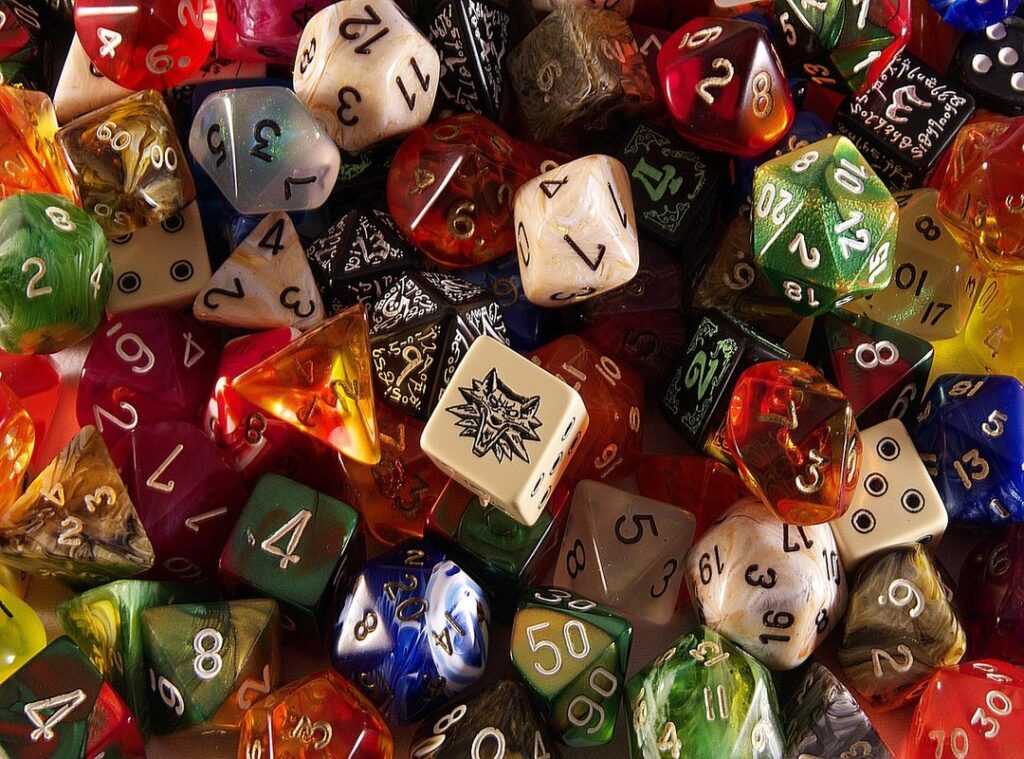
Ever stood in a game store, surrounded by dice and manuals, feeling lost amidst terms like ‘d20’ and ‘PbtA’? You’re not alone. These RPG core mechanics can feel like an alien language.
But here’s the truth: they’re not as complicated as they seem, and I’m here to prove it. I’ve spent years playing, running, and dissecting dozens of game systems. From the big names you know to the quirky indie titles you don’t, I’ve been deep in the trenches.
Why trust me? Because I’ve been where you are, overwhelmed and a bit confused, but I’ve come out the other side with takeaways to share. By the end of this guide, you won’t just learn the jargon.
You’ll understand how these systems shape stories and emotions, empowering you to choose the perfect game for your group.
The Core Mechanic: How Do You Decide What Happens?
Every role-playing game boils down to one thing: deciding what happens when the outcome is uncertain. This is the engine that drives the whole experience. It’s not just rolling dice for fun.
It’s the heart of the adventure. How you resolve these moments can make or break your game night.
Take the “Roll-and-Add” system, for example. Dungeons & Dragons is the poster child here. You roll a 20-sided die, add a modifier, and try to beat a target number.
Easy, right? But the feel of it is more than that. It’s swingy.
You can go from epic success to crashing failure in a heartbeat. It keeps you on your toes, and that’s what makes it so thrilling. You never really know.
One minute you’re a hero; the next, you’re face down in the mud.
Then there’s the “Dice Pool” system. Games like Vampire: The Masquerade or Shadowrun use it. Here, you gather dice based on your character’s skill and roll them all.
You count how many meet or exceed a target number. It feels more consistent. You build success, bit by bit.
It lets you have more subtle outcomes. You’re not just winning or losing; you’re crafting your story with each roll.
Both systems have their charm. But which one is for you? It depends on what you like.
Do you crave the unpredictability of a d20 or the steady hand of a dice pool? If you’re curious about mechanics in other genres, check out fps mechanics mastering weapons movement. It’s worth diving into if you love dissecting game mechanics.
Beyond Just Winning: Embrace the Chaos
Games today have evolved from the simple days of win or lose. Remember the classic RPGs? You either hit the orc, or you didn’t.
That clarity was kind of comforting, right? But here’s the thing: it could also grind the action to a halt. You miss, and what happens next?
Nothing. Now, we’ve got something way more interesting.
Ever heard of “Success with a Cost”? This is where modern RPGs shine. Powered by the Apocalypse (PbtA) games have nailed it.
In these games, rolling a 7-9 isn’t just “meh.” It’s a mixed success. Let’s say you’re picking a lock. You do it, sure, but a guard hears you.
Now you’ve got to deal with that. It’s all about moving the story forward, no matter what happens.
And then there’s “Failing Forward.” This might be my favorite. The idea is simple: a failed roll shouldn’t mean a dead-end. Ever tried to persuade a king and failed?
Suddenly, he’s suspicious of you. He’s side-eyeing you, making everything harder. But the story keeps rolling, and that’s the magic.
It’s all about keeping the narrative alive, breathing new tension into the game.
For those deep into RPGs, this overview dives into more core mechanics like these. It’s a treasure trove for anyone who wants to keep their games fresh and unpredictable.
These mechanics transform traditional play. You’re not just checking off boxes on a success/fail sheet anymore. You’re part of a living, breathing world where every decision counts.
It’s what makes RPGs today so compelling, and why I can’t go back to the old ways. RPG core mechanics have never been more engaging. Give them a shot, and you’ll see what I mean.
Character Blueprints: Defining Your Hero
Ever wonder why your character feels so different on paper than in action? Let’s talk about RPG core mechanics. They shape your hero’s journey long before you roll the first die.
Consider the ‘Attributes and Skills’ model. It’s grounded in numbers, with games like D&D and Call of Cthulhu leading the charge. Strength, Dexterity, and a slew of skills like ‘Athletics’ or ‘Stealth’ define your character.
This approach answers, “What can my character do?” It’s a simulation-focused style. You’re not just swinging a sword; you’re calculating every move. You might think this limits creativity, but here’s the catch: it opens up plan.
The numbers aren’t just there for show; they guide every choice, every move.
Then we have the ‘Narrative Descriptors’ model. Think FATE Core with its Aspects. Here, your character is a ‘Troubled Knight of the Area’ or the ‘Fastest Glib-Talker in the Galaxy.’ These phrases aren’t just fluff.
They’re mechanically invoked, asking, “Who is my character?” This is a story-driven method. Less about stats, more about essence. It’s all about weaving stories, not just crunching numbers.
Now, which one speaks to you? Are you the strategist or the storyteller? Both have their charm.
The beauty of gaming today is that New Playstyles Boost Gaming Experience by offering both paths.
Here’s a pro tip: blend these models. Use descriptors to color your numbers. You get a strong character (oops, I said strong) who’s both competent and compelling.
In the end, it’s not about which model is better. It’s about which one makes your game unforgettable.
So, what kind of hero will you create?
Tracking Trouble: Health, Stress, and Other Resources
Ever felt like your RPG character was just a bag of hit points? Yeah, me too. The classic Hit Points (HP) system does the job, but sometimes it feels like a relic.
You lose 8 HP and… what? It’s like a mild inconvenience. Enter Conditions.
When your character is Wounded, Exhausted, or Frightened, it paints a vivid picture. You know exactly what’s happening. It’s not just numbers (it’s) storytelling.
Now, let’s talk about other systems. Combat is fun, but RPGs aren’t just about swinging swords. Resource management is where real tension comes in.
Imagine having ‘Luck’ points. You can spend them to alter fate. Suddenly, every decision counts.
Or think about ‘Stress’ tracks. They measure your character’s mental fortitude. Hit your limit and watch things break down.
Magic Points? They limit spellcasting, forcing you to choose spells wisely.
These RPG core mechanics aren’t just rules. They’re the heartbeat of the game. They make you think.
They make you care. They force you to adapt. And here’s a thought: as games evolve, what new mechanics will we see?
Will they redefine how we experience adversity? I can’t wait to find out.
Discovering Your Perfect Game
TTRPG jargon can be overwhelming, but I hope you’re feeling more confident now. You’re ready to look beyond brand names and dig into RPG core mechanics. The “best” system?
It’s the one that supports the story you want to tell with your friends. Think about what excites you. Is it the thrill of heroic battles (like d20 systems) or the drama of cascading consequences (Success with a Cost)?
Use this newfound insight to explore games boldly. Dive in, explore, experiment. Your perfect game is waiting.
Head over to mopfell78.com to keep your adventure going. Click and start now.