

The FPS genre history is a journey from pixelated corridors and maze-like maps to massive global arenas filled with cinematic realism and competitive intensity. Yet with decades of releases, evolving mechanics, and shifting design philosophies, it’s easy to lose sight of the key breakthroughs that shaped the genre. This article delivers a clear, chronological look at how first-person shooters evolved—spotlighting the landmark titles, technical innovations, and multiplayer revolutions that redefined play. Built on years of hands-on experience and mechanical analysis, this guide breaks down the pivotal moments that transformed FPS games into a worldwide phenomenon.
The Genesis: Defining the First-Person Perspective
The FPS genre history begins with a simple but radical idea: see through the hero’s eyes. In Wolfenstein 3D, that meant tight corridors, color-coded keys, and a constant juggle between health (your life meter) and ammo (your firing currency). This “corridor-clearing loop” became the blueprint—move, shoot, survive, repeat. Some critics argue it was mechanically shallow by modern standards. Fair. Yet without that stripped-down focus, the genre might never have found its rhythm.
Then came DOOM, and with it, a revolution. Levels sprawled vertically, demons attacked in varied patterns, and “deathmatch” (competitive multiplayer where players hunt each other) was born. Just as importantly, modding—player-created custom content—turned fans into designers. In hindsight, that openness feels inevitable; at the time, it was punk rock (the garage-band era of code).
Next, Quake delivered true 3D models and client-server architecture, meaning online matches were hosted centrally for smoother play. Rocket jumping—using explosive force to propel yourself—introduced skill-based movement. Looking ahead, it’s reasonable to speculate future shooters will double down on physics-driven traversal and community-built modes, blending nostalgia with next-gen immersion.
The Narrative Age: Storytelling and Console Viability
I still remember booting up Half-Life for the first time and waiting for a cutscene that never came. Instead, a scripted sequence—a pre-programmed in-game event that unfolds without taking control away from the player—played out while I could still move, look around, even ignore it. That was integrated storytelling: narrative delivered through gameplay itself, not through cinematic breaks. Valve trusted players to pay attention. And we did. (Funny how not pausing the action made everything feel more real.)
Some critics argued that traditional cutscenes were essential for emotional depth. After all, games like Metal Gear Solid leaned heavily on them. But Half-Life proved immersion could be stronger when you never “left” the world. According to retrospective analyses by IGN and GameSpot, its seamless design directly influenced modern narrative shooters.
Then came GoldenEye 007 and later Perfect Dark. I spent entire weekends in split-screen—multiplayer on a single screen divided into sections—arguing over who screen-peeked. These games countered the belief that first-person shooters belonged only on PC. With objective-based missions and stealth mechanics—systems that reward careful movement over brute force—they translated PC complexity to console comfort. They reshaped FPS genre history in the process.
Of course, not everyone was convinced. PC purists dismissed analog sticks as inferior. Yet sales numbers and critical acclaim (NPD reports, late ’90s) told another story.
Finally, Counter-Strike turned tension into design. Its round-based format—short matches with permanent consequences per round—made every footstep matter. What started as a mod became a global esport (ESL data, early 2000s). If you compare that evolution to how battle royale games evolved over the last decade, you’ll see the same pattern: high stakes create unforgettable moments.
The Modern Multiplayer Boom: Redefining Online Combat
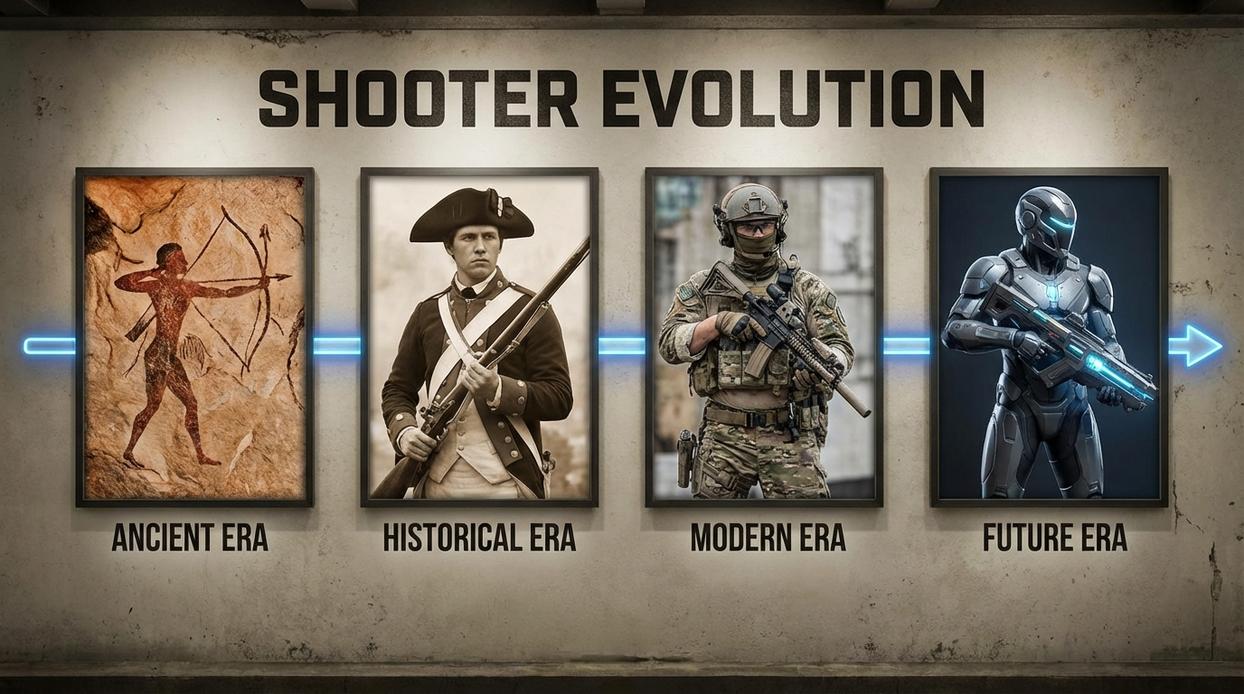
The modern FPS landscape didn’t just evolve—it split into distinct philosophies. To understand today’s online combat, it helps to compare the giants side by side.
Halo: Combat Evolved vs. Call of Duty 4: Modern Warfare starts with pacing. Halo’s famous “30 seconds of fun” loop—meaning every half-minute delivers a satisfying combat beat—relied on regenerating shields, tight arena maps, and the two-weapon limit. That limit forced trade-offs: sniper control or close-range dominance? Meanwhile, Modern Warfare pushed speed and customization. Its create-a-class system and perks transformed multiplayer into a progression treadmill (in a good way), giving players long-term goals beyond a single match. Some argue Halo’s simplicity was purer. Others counter that Modern Warfare’s layered loadouts created deeper player expression. Both are right—it depends whether you value even starts or personalized builds.
Control schemes tell a similar story. Halo standardized dual-stick aiming for consoles, a benchmark still used across FPS genre history in the section once exactly as it is given. In contrast, Modern Warfare refined aim assist and killstreak rewards, amplifying cinematic momentum.
Then there’s Battlefield vs. the rest. While Halo and COD focus on tight infantry firefights, Battlefield leans into sandbox physics, vehicular combat, and large-scale maps. Environmental destruction—collapsing buildings, reshaped cover—changes tactics mid-match. Add class-based teamwork (medics revive, engineers repair), and victory hinges on coordination rather than kill counts. Critics say it feels chaotic. Fans call it emergent strategy (think controlled mayhem, not randomness).
Ultimately, Halo rewards map mastery, Modern Warfare rewards progression planning, and Battlefield rewards teamwork. Choosing your arena isn’t about which is better—it’s about how you want to fight.
The Era of Specialization: Sub-Genres and Live Services
As multiplayer games matured, specialization became inevitable. Consider the Hero Shooter. Titles like Overwatch and Apex Legends fused tight gunplay with ability-driven characters, adding layered team composition and counterplay. Blizzard reported over 35 million Overwatch players within two years of launch (Blizzard, 2018), evidence that strategy plus personality resonated at scale. In other words, raw aim was no longer enough.
Then came the Battle Royale wave. PUBG sold over 75 million copies (Krafton, 2021), while Fortnite surpassed 350 million registered players (Epic Games, 2020). The last-player-standing loop—massive maps, scavenging, shrinking zones—created high-stakes drama every match. Who survives when 99 others drop in?
Meanwhile, live service models reshaped monetization. Instead of one-time purchases, seasons and battle passes drive recurring revenue; over 70% of Fortnite’s revenue comes from cosmetics (SuperData, 2019). Critics argue this fragments games, yet data shows sustained engagement. From FPS genre history to today’s evolving ecosystems, specialization isn’t a fad—it’s a proven pivot.
The Future of the First-Person Perspective
The leap from arcade chaos to tactical depth proves how far the genre has come. Understanding this FPS genre history gives you clarity on where it’s going next—extraction shooters, VR immersion, and AI-driven combat are redefining what skill and strategy mean. If you’ve been trying to stay ahead of shifting metas and emerging mechanics, now’s the time to adapt. Stay plugged into evolving trends, refine your setup, and master the next wave before it masters you.