
From sold-out esports arenas to late-night squad sessions in living rooms around the world, battle royale games dominate the modern multiplayer landscape. Yet most players dropping into Fortnite or Warzone rarely see the long, player-driven path that made these moments possible. The genre didn’t begin with billion-dollar studios—it grew out of gritty military simulation mods and experimental community projects that reshaped competitive survival. This article delivers a definitive timeline of the battle royale evolution, tracing the key titles, design breakthroughs, and mechanical innovations that transformed a niche mod into one of gaming’s most influential global phenomena.
The genesis of the modern last-man-standing craze traces back to a scrappy corner of the ARMA 2 and ARMA 3 modding forums, where military-sim purists swapped scripts like baseball cards. In 2013, Brendan Greene—better known by his handle PlayerUnknown—released the “Battle Royale” mod, inspired by Japanese dystopian fiction and DayZ’s unforgiving sandbox. The pitch was deceptively simple: drop dozens of players onto a sprawling Chernarus map, scatter weapons across barns, fire stations, and coastal towns, then squeeze everyone together with a shrinking safe zone. Those core mechanics—open terrain, frantic scavenging, and a closing circle—became the genre’s DNA.
Yet skeptics argued it was just a mod, a fleeting experiment destined to fade like countless Steam Workshop curiosities. However, the demand for structured, session-based survival proved otherwise. When H1Z1: King of the Kill launched as a standalone, it refined pacing, standardized 150-player lobbies, and optimized netcode for faster firefights. Suddenly, TwitchCon showdowns and Las Vegas invitationals showcased what felt less like a mod and more like an esport. This pivotal step in battle royale evolution demonstrated that controlled chaos could be commercially viable, paving the runway for today’s polished arenas. the transformation of rpgs from turn based to open world reveals parallels.
Codifying the Chaos: How PUBG Forged the Modern Template
Before PlayerUnknown’s Battlegrounds (PUBG), battle royale was more experiment than institution. Mods like DayZ and ARMA’s survival scenarios had the spark, but PUBG delivered the polish. It transformed scattered ideas into a cohesive system built around one ruthless loop: drop, loot, survive, win.
What set PUBG apart was its emphasis on realism. Weapons behaved like their real-world counterparts, complete with recoil patterns, bullet drop (projectiles losing height over distance), and tactical attachments such as compensators and foregrips. The pacing was deliberate—less arcade sprint, more white-knuckle crawl through tall grass. For core shooter fans, this felt like chess with assault rifles.
Some argue PUBG was clunky at launch—and they’re right. Animations were stiff, bugs were common. But the tension created by its grounded design outweighed the rough edges. Commercially, it proved the genre wasn’t a fad but a foundation for battle royale evolution.
| Core Element | PUBG’s Standard | Industry Impact |
|---|---|---|
| Gunplay | Realistic ballistics |
Influenced tactical BR titles |
| Pacing | Slow, methodical | Created high-stakes tension |
| Loop | Drop → Loot → Survive → Win | Adopted universally |
So what’s next? If PUBG set realism as the benchmark, future titles must decide: double down on authenticity—or deliberately break it (as Fortnite did) to stand out. Either way, PUBG remains the blueprint.
Building an Empire: Fortnite’s Free-to-Play and Live Service Revolution

The Accessibility Shift
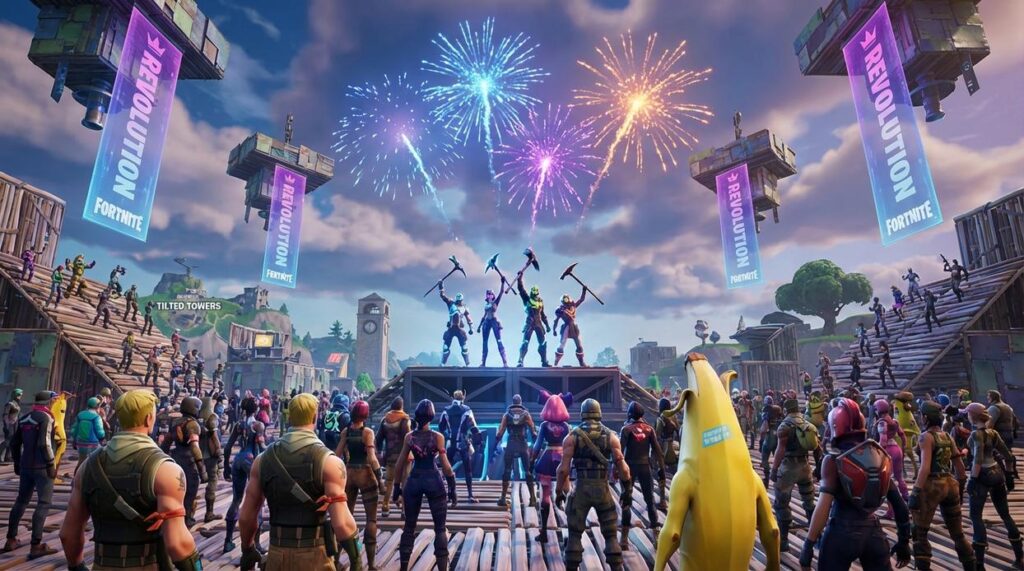
When Fortnite dropped its $0 price tag, one player famously tweeted, “Wait… I can just download this?” That question changed everything. Free-to-play means a game costs nothing upfront, removing the purchase barrier that often limits audience size. According to Epic Games, Fortnite surpassed 350 million registered players by 2020, a scale few paid titles ever reach. Critics argued free games rely too heavily on microtransactions. Fair point. But cosmetic-only purchases—skins, emotes, wraps—kept competition fair while funding development. As one streamer put it, “I’ve never felt forced to pay to win.” That balance fueled massive growth.
Gameplay Innovation
Then came the twist: building. In the middle of a firefight, players could throw up walls, ramps, entire forts. It wasn’t just shooting—it was strategy at hyperspeed. A developer once described it as “defense and offense happening at the same time.” The mechanic redefined battle royale evolution by adding verticality and creativity.
- Instant cover creation
- High-skill editing plays
- Wild, player-made arenas
Building turned panic into possibility.
The Live Service Model
“Fortnite isn’t just a game anymore,” a fan said during the Travis Scott concert event. He was right. A live service model means continuous updates, seasonal Battle Pass rewards, and real-time events. From storyline finales to virtual concerts, Fortnite became a digital stage (part Hunger Games, part Ready Player One).
The modern battle royale evolution can feel confusing, so let’s break it down. Early titles focused purely on survival: drop in, loot, outlast. Then Apex Legends introduced “Legends,” predefined characters with unique abilities. In simple terms, a hero shooter is a game where each character has specific powers—think Overwatch-style skills—rather than identical soldiers. By blending that idea into a last-player-standing format, Apex shifted strategy from raw aim to coordinated ability use.
Two features especially clarified team play. First, the Ping system. A ping is a contextual marker you place in the world to signal enemies, loot, or directions without speaking. For players without microphones (or who just prefer silence), this reduced confusion dramatically. Second, respawn beacons allowed eliminated teammates to return. Instead of watching from the sidelines, squads had a structured comeback mechanic.
Some argued these changes made matches too forgiving. But reducing early-elimination frustration kept players engaged longer.
Then came Call of Duty: Warzone. Its Gulag—a 1v1 duel after death—offered a clear second chance, while custom loadouts let players access familiar weapons. For traditional FPS fans, that familiarity lowered the barrier to entry (comfort matters more than we admit).
As we explore the fascinating evolution of battle royale games over the last decade, it’s impossible not to look forward to the innovative titles that are set to shape the genre’s future, making our next article on the top game release announcements you shouldn’t miss this year even more exciting – for more details, check out our Top Game Release Announcements You Shouldn’t Miss This Year.
The Future of the Drop: Where Does the Genre Go From Here?
From gritty mod beginnings to polished tactical shooters, from accessible live-service platforms to hybrid experiences packed with new mechanics, the battle royale evolution has been anything but static. Understanding that journey helps you see why your favorite games feel the way they do—and why certain mechanics click while others fall flat.
As the genre matures, expect deeper single-player narrative layers, AI-driven map events that reshape matches in real time, and even tighter genre-blending with RPG and extraction systems.
If you want to truly feel this evolution, drop into a battle royale from a different era. Experience the shift firsthand—and discover what style of survival really keeps you coming back.