
If you’re searching for a clear breakdown of how skill tree progression systems shape modern gaming, you’re in the right place. Players today want more than flashy visuals—they want meaningful choices, flexible builds, and progression paths that actually impact gameplay. This article explores how these systems work, why they matter across different genres, and how they influence combat flow, character identity, and long-term replayability.
We’ll break down core mechanics, compare popular design approaches, and examine how multiplayer dynamics and balance updates affect progression decisions. You’ll also find practical tips for optimizing your build and avoiding common progression mistakes that can slow your momentum.
Our insights are grounded in hands-on analysis of current titles, deep dives into evolving genre trends, and close observation of competitive and cooperative play environments. Whether you’re a casual player or a min-max strategist, this guide will help you understand how to make smarter progression choices from the start.
The Core of Player Progression
Skill trees are more than static menus; they’re the architectural blueprint guiding a hero from clumsy beginner to endgame powerhouse. At their best, skill tree progression systems turn abstract experience points (XP, the numerical reward for actions) into meaningful choices that shape playstyle and identity.
So how does that translation actually work?
- XP fuels unlocks, converting effort into tangible perks like new abilities or stat boosts.
- Branching paths force trade-offs, encouraging specialization over bland balance.
- Milestone skills redefine combat flow, not just numbers.
If progression feels like grinding for +2% damage (we’ve all been there), the system likely lacks impactful decision points. Look for trees that reward experimentation and clarify long-term builds early.
Foundational Blueprints: Linear vs. Branching Paths
When designers talk about Linear and Branching systems, they’re describing how players move through skill tree progression systems. Think of it as choosing between a straight highway and a network of side roads.
The Linear System
A linear system is a guided, step-by-step progression where each upgrade unlocks the next in a fixed order. There’s little deviation. Early MMO class trees worked this way: you improved Fireball, then Greater Fireball, and so on. Simple.
Pros:
- Easy to understand
- Predictable to balance
- Clear role identity
Cons:
- Limited experimentation
- Fewer unique builds
Critics argue linear models feel restrictive—and they’re not wrong. But that structure can prevent analysis paralysis (no one enjoys staring at a menu longer than actually playing).
The Branching System
A branching system offers multiple specialization paths. Choosing one often locks you out of others. Diablo II is a classic example: invest in Blizzard, and you’re committing to cold mastery.
Pros: meaningful choice and replay value.
Cons: dominant “cookie-cutter” builds and the fear of picking “wrong.”
Some players dislike permanent decisions. Yet that permanence creates identity. Without trade-offs, choices lose weight—and games risk feeling flat.
Modern Evolutions: Webs, Constellations, and Hybrids
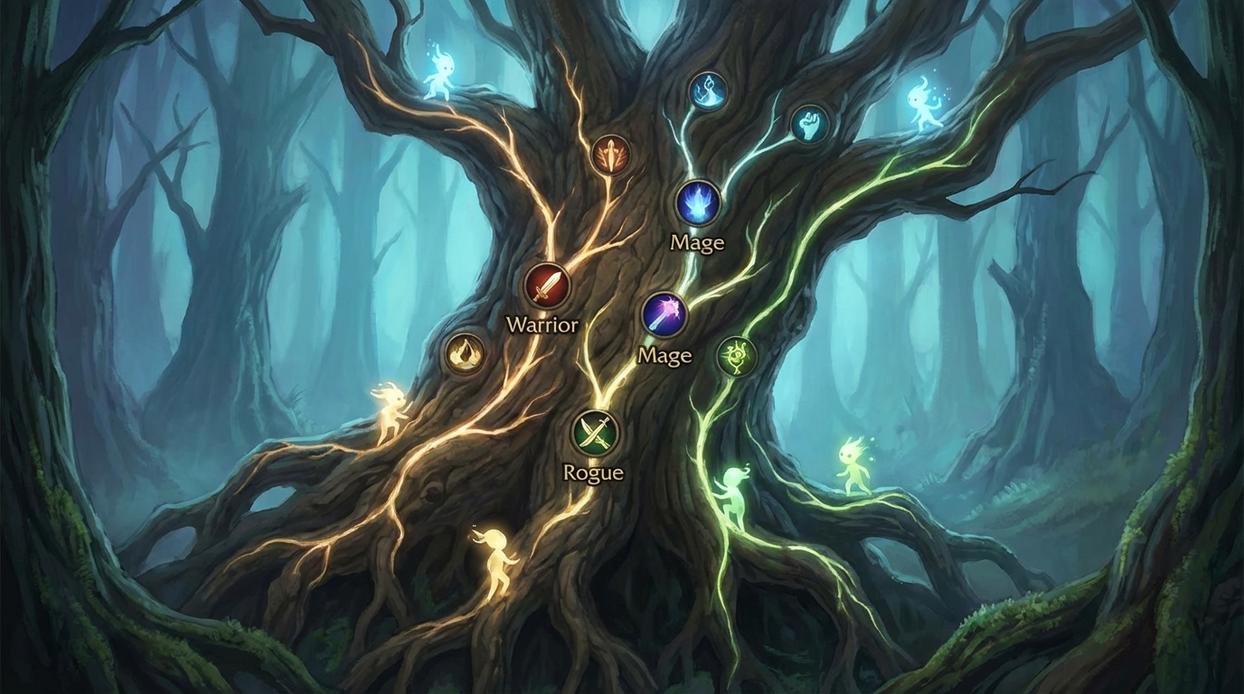
As RPG systems evolved, developers moved beyond straight lines and simple branches into sprawling webs and constellations. The Web/Constellation Model is exactly what it sounds like: a massive network of interconnected nodes (individual upgrade points that grant stats, perks, or abilities). Instead of moving from Point A to Point B, players chart their own route across a galaxy of options. Path of Exile is the textbook example, with over a thousand nodes forming a near-overwhelming grid of possibility.
This design supercharges player freedom and theory-crafting (the practice of planning optimized builds before you even play). But it can also cause “analysis paralysis,” a term for decision overload when too many choices stall progress. Newcomers often stare at the screen like it’s a calculus exam.
To balance freedom and clarity, many games now use a Hybrid Approach. For example, Cyberpunk 2077 blends:
- Branching trees for active abilities
- Linear paths for core stats
- Separate passive perk systems
In simple terms, hybrids mix structure with flexibility. You get guidance without losing customization.
Some critics argue these complex skill tree progression systems are unnecessarily bloated. Why not keep it simple? The counterpoint is longevity. According to industry analyses from GDC talks and player retention studies by Newzoo (2023), deeper progression systems correlate with longer engagement cycles in RPGs.
Ultimately, these modern designs reflect a genre-wide shift: accommodating multiple playstyles within a single character. And if you’re already thinking strategically, understanding these layers pairs naturally with mastering resource management in competitive games.
The Psychology of Meaningful Advancement
Few things are more frustrating than grinding for an hour only to unlock… +2% damage. Two percent. You can’t feel it. You can’t see it. It’s the gaming equivalent of a participation trophy.
In contrast, unlocking a new dash ability or elemental combo feels transformative. These are active nodes—skills that change how you play. Passive nodes, like minor stat bumps, have their place, but when overused in skill tree progression systems, they make progress feel invisible. And invisible progress is demotivating (yes, even if the math says you’re stronger).
Pacing matters just as much. When games delay meaningful upgrades too long, players burn out. On the flip side, well-placed “capstone” skills create power spikes that feel earned—like finally going Super Saiyan after hours of buildup. That rhythm of effort and reward keeps engagement high (behavioral psychology calls this a variable reward loop).
Then there’s synergy—the secret sauce. A great tree encourages combinations that feel clever, not accidental:
- Pairing crowd control with damage-over-time effects
- Stacking mobility boosts with backstab multipliers
When builds become more than the sum of their parts, experimentation feels rewarding instead of risky. And that’s the difference between progress that’s technically there—and progress that actually feels meaningful.
Common Design Pitfalls and Player Frustrations
Even the most ambitious games can stumble when their progression systems undermine player agency.
The Illusion of Choice happens when multiple paths lead to functionally identical outcomes. On paper, it looks deep. In practice, it feels like picking between red or blue wires that both open the same door. Players notice (they always do). If choices don’t meaningfully change strategy, combat flow, or narrative impact, they become cosmetic.
Recommendation: Design or choose games where different builds alter moment-to-moment gameplay in visible ways.
Mandatory “Tax” Nodes are filler upgrades you must unlock just to reach something fun. Think +1% damage boosts blocking a flashy ability. These slow momentum and make skill tree progression systems feel like chores instead of rewards.
Pro tip: Prioritize games that let you access defining abilities early.
Punishing Experimentation is the fastest way to kill creativity. If respec costs are extreme, why experiment at all? Flexible systems encourage bold playstyles and long-term engagement.
From rigid class lines to sprawling webs of perks, advancement systems shape who we become in-game. Think of it like choosing a Hogwarts house—except you design the house yourself. Well-built skill tree progression systems turn leveling up from a bland stat bump into meaningful choice.
Instead of:
- +5 strength and nothing else
- another forgettable passive
You face trade-offs, synergies, and identity-defining paths (yes, your inner min-maxer is smiling).
Some argue numbers alone are enough; after all, Diablo proved loot can carry progression. True—but agency is the real power fantasy. When players steer growth, mastery feels earned, not assigned.
Level Up Your Gameplay with Smarter Progression
You came here to better understand how modern gaming systems, evolving genres, and multiplayer dynamics shape the way you play. Now you’ve seen how mechanics, meta shifts, and especially skill tree progression systems directly impact your performance and long-term enjoyment.
The real frustration isn’t losing a match — it’s feeling stuck. Choosing the wrong build. Wasting points. Missing optimization tweaks that other players are quietly using to dominate. When you don’t understand the systems beneath the surface, progress feels slow and inconsistent.
The fix is simple: play smarter, not longer. Study the mechanics, refine your build paths, optimize your setup, and adapt to evolving multiplayer strategies before the meta leaves you behind.
If you’re serious about gaining an edge, dive deeper into our latest breakdowns and optimization guides. Thousands of competitive and casual players rely on our insights to sharpen their builds and maximize performance. Don’t guess your way through your next upgrade — explore the newest strategies now and start winning with intention.