
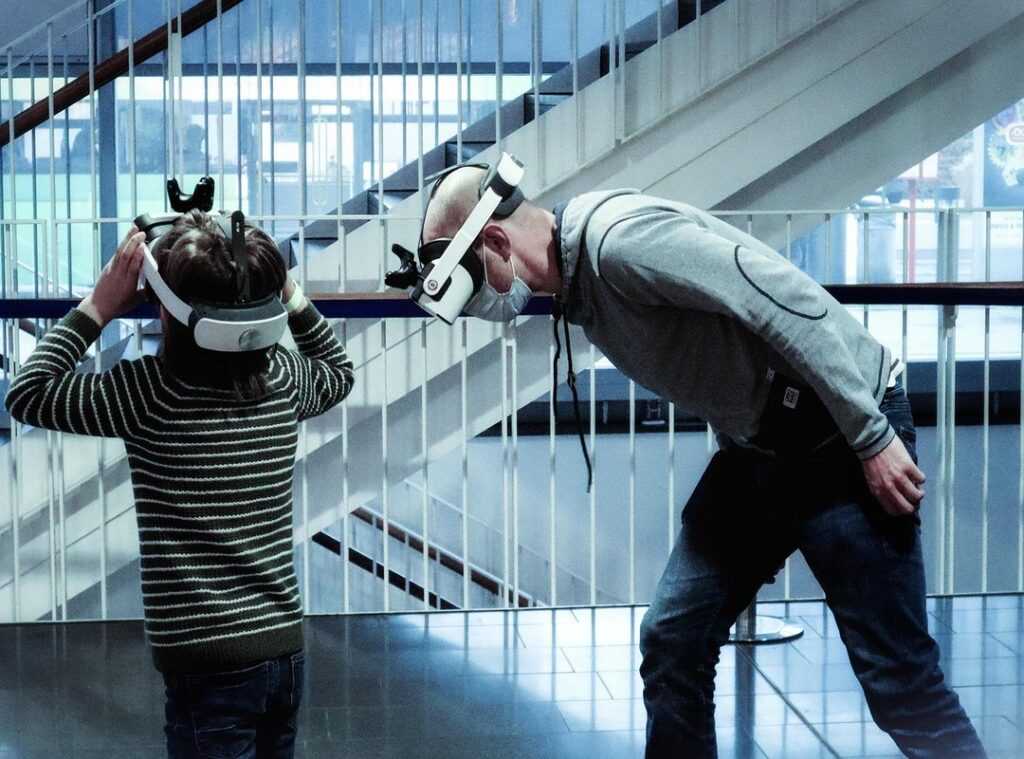
Ever lost track of time playing a game? You know, when a quick session turns into an all-nighter. It’s a common mystery: why do some games keep you hooked?
It’s not just flashy graphics or massive budgets. My passion is unraveling what makes games tick. From core mechanics to player interactions, there’s more beneath the surface.
And yes, virtual reality gaming adds another layer. You’re about to discover what separates the good from the unforgettable. By the end, you’ll have a new lens to find your next immersive adventure.
Ready to dive into the secrets of gaming addiction? Let’s go.
Beyond the Hype: Understanding Immersion
Immersion isn’t just feeling like you’re somewhere else. It’s that deep mental involvement where you lose track of time. Ever been so caught up in a game that the real world fades away?
That’s immersion.
Surface-level immersion is just shiny graphics and booming sound. Nice, but not enough. Deep immersion?
That’s when everything in the game fits together like a puzzle. You know, when the world feels logical and you start believing in it.
Player agency plays a big role here. If you can make meaningful choices, you’re more likely to feel part of the world. It’s like getting to write your own story within the game.
Feels great, right?
Then there’s the diegetic user interface. Instead of floating health bars, everything’s part of the game world. Like the Pip-Boy in Fallout.
It keeps you grounded, less distracted.
Virtual reality gaming promises this kind of immersion, but it’s not always achieved. It’s about more than just strapping on a headset. Games have to be designed to support this sense of involvement.
For those interested in how genres evolve, check out the survival horror rise evolution. It’s a fascinating dive into the development of solid gaming experiences.
The Unseen Architecture: Core Mechanics That Create Belief
Ever wondered why some games feel so real you almost forget you’re playing? It’s all in the details. The magic lies in the gameplay systems, the invisible wires that convince you this world exists apart from your screen.
It’s the weather, the AI, the physics. Each a thread in the mix of belief (yeah, I used the T-word).
Take “Breath of the Wild” as an example. Remember the rain? It’s not just there for ambiance.
It makes surfaces slippery, extinguishes fires, turns the game into a different playground. It’s changing, unpredictable. You think you’re climbing a mountain, but suddenly you’re sliding down, recalibrating your plan on the fly.
This is what we call ‘Systemic Design.’ These interconnected systems create moments you didn’t see coming.
Now, let’s talk about controls. Ever played a game where every button press feels like a direct line to the character? It’s what I call ‘Responsive Controls.’ When there’s no delay or clunkiness, the barrier between you and the game dissolves.
You forget the controller in your hand and just react. This is where games like “Celeste” shine. The character does exactly what you want, exactly when you want it.
It’s liberating.
Then there’s the concept of ‘Consequence and Permanence.’ A game world that remembers you. Not just the big decisions, but the little acts of kindness or mischief too. It could be as big as saving a kingdom or as small as helping an NPC find their lost cat.
These actions stick around, shaping the world and your connection to it. You become invested.
This immersion echoes in virtual reality gaming, where every gesture and choice matters. You act, and the world responds. It’s that interaction that pulls you in deeper.
It’s not just about playing a game; it’s about living in it, feeling a part of it. And isn’t that what gaming is truly about?
Worlds That Speak: Environmental Storytelling
Ever get lost in a game and feel like the world itself is whispering secrets? That’s the magic of environmental storytelling. It’s like the game is a silent film, rich with history and emotion, yet never uttering a word.
Take ‘The Last of Us’, for instance. Those scattered skeletons and abandoned notes? They tell tales of their own, no dialogue needed.
Then there’s the haunting beauty of Rapture in ‘BioShock’. Its decaying grandeur speaks volumes about a society that once was. It’s like wandering through the remnants of a once-great civilization, each crumbling statue a its former glory.
But sound plays a role too. I’m not just talking about the epic soundtracks (though they’re fantastic). It’s the ambient noise that pulls you in.
The wind howling through deserted streets or the distinct crunch of footsteps on gravel. These sounds create a living, breathing world that feels real.
Level design is another unsung hero. A well-crafted level guides you naturally. You feel like you’re discovering the path on your own, not being led by the nose.
It’s like a well-directed movie scene, where every element points you in the right direction without you even realizing it.
Virtual reality gaming is pushing these boundaries even further. Imagine stepping into a world that tells a story but envelops you in it. It’s a new frontier, much like the evolution of battle royale games.
Want to dive deeper? Check out this guide.
The Human Factor: Multiplayer and Shared Realities
Let’s talk about the magic of multiplayer in gaming. It’s like throwing a rock into a still pond; suddenly everything changes. You know exactly what I mean if you’ve ever been in a heated virtual reality gaming session.

Other players are the ultimate spice. They’re wild cards.
Facing a human opponent isn’t like battling an AI. AI has patterns. It’s predictable, like knowing the punchline before the joke’s finished.
But a human player? They’re creative and chaotic. Imagine them as jazz musicians, improvising and keeping you always on edge.
That’s how encounters become electric.
Now, think about the bonds formed in cooperative gaming. You’ve got your team, all sweating bullets in a tough raid in an MMO. Yeah, you might fail a hundred times, but when you succeed?
That shared triumph becomes a war story, personal and unforgettable. It’s like climbing Everest with friends. The journey tightens bonds in ways you’d never expect.
Then there are games that spawn emergent narratives, like ‘Minecraft’ or ‘EVE Online.’ Here, players don’t just play; they craft worlds and epic tales. Suddenly, you’re not just in a game. You’ve created a universe.
It’s the pinnacle of immersive storytelling. You’re in a sandbox where anything could happen.
So why does this matter? Because nothing beats the unpredictability of human interaction. It enhances every virtual world, making it richer, more lively.
If you’re not leaning into multiplayer experiences, you’re missing out on the best aspect of gaming. It’s where the unexpected thrives.
Games That Pull You In
Let’s talk about games that truly immerse us. Red Dead Redemption 2 nails it with its reactive world and attention to detail. The environment feels alive, like it’s breathing around you. Then there’s Half-Life: Alyx.
It’s the gold standard for virtual reality gaming. The way you interact physically with the world around you in VR is just on another level.
Lastly, Disco Elysium. It’s a masterpiece of narrative choice (ever tried talking to yourself in a game?). The consequences of your decisions are unparalleled.
These games redefine what immersion means. What more could you ask for?
Dive Into the Next Level
Finding that unique game is tough. It’s not just tech; it’s design, world-building, and how much freedom you have. Too many options, right?
So why not focus on identifying these gems? Use these ideas next time you explore virtual reality gaming. Ready to uncover the best?
Visit mopfell78.com now.